
Liver Function Test Results Explained
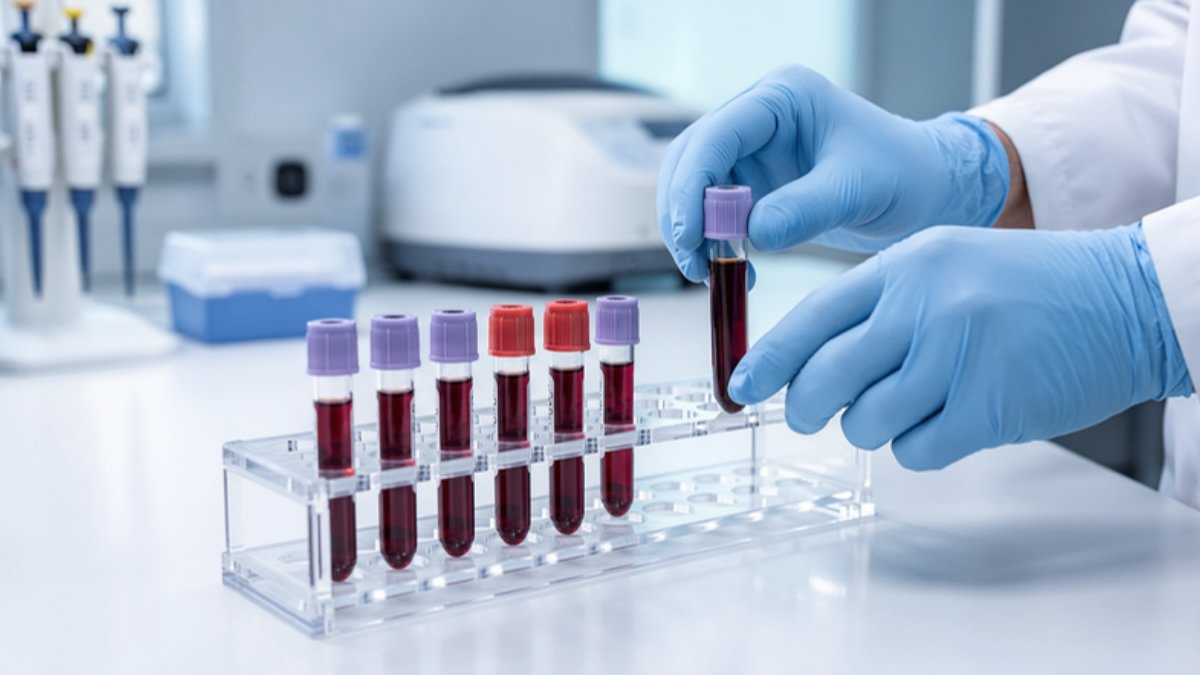
A liver function test is a blood test, also called a liver panel, that measures several substances in your blood: the enzymes ALT, AST, ALP and GGT, bilirubin, and proteins such as albumin. Despite the name, most of these show signs of liver injury rather than how well the liver is working. That is why the UK guideline prefers the term "liver blood tests", and the US guideline "liver tests" or "liver chemistries". Results outside the range are common and do not always mean a liver problem, but they are worth discussing with your doctor. A normal result does not rule out liver disease either.
This guide explains what each marker means, what else can raise it and how to read the reference ranges. It also covers what happens after an abnormal result, and how to get tested at home in the UAE.
Liver function test results at a glance
- What is measured: ALT, AST, ALP, GGT, bilirubin, albumin and total protein.
- Abnormal results are common: 30% of liver blood test requests from GP practices to one Birmingham hospital in 2016 had at least one abnormal result. Most people referred to hospital with abnormal liver tests have no evidence of significant liver disease (British Society of Gastroenterology).
- Normal does not always mean healthy: normal liver blood tests do not rule out advanced liver scarring.
- Ranges differ between laboratories, so use the range printed on your report.
- Yellow skin or eyes needs urgent medical help.
What each marker means
| Marker | What it is | Can also be affected by |
|---|---|---|
| ALT | An enzyme found mainly in the liver; more liver-specific than AST | Intense exercise; the menstrual cycle |
| AST | An enzyme found in the liver, heart, muscles and other tissues | Muscle or heart damage, strenuous exercise |
| ALP | An enzyme; when raised more than ALT and AST, doctors call this a cholestatic pattern | Bone disease, late pregnancy, childhood growth, a fatty meal |
| GGT | An enzyme; a raised level is not specific for liver disease | Obesity, excess alcohol, some medicines |
| Bilirubin | Measured as total and direct bilirubin | Gilbert's syndrome, when it is the only raised result |
Sources for the table: MedlinePlus (ALT and AST); the British Society of Gastroenterology (ALT specificity, AST in muscle and heart, GGT and Gilbert's syndrome); the American College of Gastroenterology (patterns, and causes outside the liver for AST and ALP). The British Society of Gastroenterology also calls a raised GGT one of the best predictors of liver mortality, so it is not a result to ignore.
The panel also measures albumin and total protein. Our panel reports globulin as well.
Patterns your doctor looks at
Doctors also look at the pattern of results. The American College of Gastroenterology describes two main patterns:
- Hepatocellular pattern: AST and ALT are raised more than ALP. This points to injury to liver cells.
- Cholestatic pattern: ALP is raised more than AST and ALT.
Gilbert's syndrome and a raised bilirubin
When bilirubin is the only raised result, the most common cause is Gilbert's syndrome, which affects 5 to 8% of people (British Society of Gastroenterology). The NHS describes it as a common genetic condition that may cause mild jaundice, does not damage the liver, does not usually cause serious health problems and does not need treatment. Only a doctor can make this diagnosis, because it depends on the type of bilirubin raised and on other results.
Reading the reference ranges
There is no single normal range for liver tests. The American College of Gastroenterology notes that upper limits for AST and ALT vary between laboratories, and MedlinePlus explains that labs often use different testing methods and so different reference ranges. Use the range printed on your own report.
For ALT, the American College of Gastroenterology says a true healthy normal level is 29 to 33 IU/L for men and 19 to 25 IU/L for women, in people without risk factors for liver disease. It adds that levels above this should be assessed by a doctor. Many laboratories use higher upper limits, and the British Society of Gastroenterology notes emerging evidence that current ALT reference ranges may be too high. If your ALT is above these levels but inside your laboratory's range, mention it to your doctor at your next appointment.
Enzymes such as ALT, AST, ALP and GGT are reported in units per litre (U/L or IU/L). Bilirubin is reported in micromoles per litre (µmol/L) or milligrams per decilitre (mg/dL); 1 mg/dL equals 17.1 µmol/L (Labcorp).
What an abnormal result can mean
An abnormal result is a reason to talk to your doctor, not a diagnosis. MedlinePlus notes that abnormal results do not always mean a liver problem, that other conditions can change these levels, and that some abnormal results may be temporary if you have been ill recently.
- Tests alone do not diagnose: the British Society of Gastroenterology says liver blood tests, used in isolation, are neither specific diagnostic tools nor specific exclusion tools. In a 10-year study in Tayside, Scotland, 3.9% of people with an abnormal AST or ALT were diagnosed with significant liver disease within 5 years.
- The most common causes: most adults with abnormal liver blood tests are found to have fatty liver disease or alcohol-related liver disease (British Society of Gastroenterology).
- Size is not severity: the British Society of Gastroenterology says the extent of the abnormality is not necessarily a guide to its clinical significance.
- Next steps are for your doctor: the UK guideline recommends looking for the cause, which may include an ultrasound scan and blood tests such as hepatitis B and C. The US guideline suggests first repeating the panel or doing a clarifying test, to confirm the result is really abnormal. Your doctor will decide which applies to you.
- Tell your doctor about recent hard exercise, because it can raise AST and ALT.
- Statins: the British Society of Gastroenterology says liver injury from statins is very rare, and that studies show statins are safe in people who already have abnormal liver enzymes. Do not start or stop any medicine unless your doctor tells you to.
When a normal result is not the whole story
The British Society of Gastroenterology says normal liver blood tests do not rule out advanced liver scarring (fibrosis and cirrhosis), in its section on alcohol-related liver disease. The American College of Gastroenterology says a normal ALT may not exclude significant liver disease. The NHS adds that most types of liver disease cause no symptoms in the early stages. If you have risk factors, discuss them with your doctor even if your results are normal.
Fatty liver disease (MASLD)
MASLD is the new name for non-alcoholic fatty liver disease: metabolic dysfunction-associated steatotic liver disease, agreed by international liver societies in 2023. The new definition requires fat in the liver plus at least one of five cardiometabolic risk factors.
The NHS says fatty liver disease does not usually cause any symptoms and is usually found when you have tests for another reason. You are more likely to have it if you:
- are overweight, particularly with a lot of fat around your stomach and waist;
- have type 2 diabetes;
- have polycystic ovary syndrome;
- have high blood pressure or high cholesterol;
- are over 50;
- do not have a healthy diet or are not very physically active.
Most people only have the first stage, which does not usually cause any problems (NHS).
Fatty liver in the UAE
Large population studies of fatty liver in the UAE had not been done when the authors of one UAE study wrote in 2024. Their study was small: 153 people with type 2 diabetes selected from 6,214 records screened at Tawam Hospital's diabetes clinic in Al Ain. Of these, 45.1% had MASLD on a liver ultrasound score (Alkaabi and colleagues, 2024). If you have diabetes, see our guide to the HbA1c normal range, a key diabetes blood test.
When to get urgent help
Jaundice is when your skin or the whites of your eyes turn yellow. The NHS says it can be a sign of something serious, such as liver disease, so you need urgent medical help. You may also have itchy skin, darker urine and paler stools than usual. Do not wait for a home test if you notice these signs.
How to prepare for the test
- Our liver function test panel: no special preparation is needed, and you can eat and drink normally.
- Single-marker tests: some of our single tests ask for an 8 to 12 hour fast. ALT and AST ask you to avoid alcohol for 24 hours, GGT for 24 to 48 hours, and ALP asks you to avoid fatty meals. Follow the instructions for the test you book.
- Medicines: tell your doctor about everything you take, but do not stop any medicine unless your doctor tells you to (MedlinePlus).
Liver function test at home in the UAE
A phlebotomist can collect your sample at home or at your office in Dubai, Abu Dhabi and across the UAE. Tests are performed by licensed partner laboratories.
- Liver function test: AED 150, VAT included, no special preparation, results in 24 hours. It measures total protein, albumin, globulin, bilirubin (total and direct), ALP, ALT, AST and GGT.
- Kidney and liver function profile: AED 150. Liver markers (total bilirubin only, not direct) plus kidney tests such as urea, creatinine and electrolytes. You can eat and drink normally, and results take 24 hours.
- Home collection: AED 150 plus 5% VAT (AED 157.50) per visit, paid at the visit.
- Total for one liver function test at home: AED 307.50.
If your doctor requests it, a hepatitis B surface antigen test (AED 150) can be added to the same visit. For more about liver testing, see our liver function test page, and for every test and price, our lab test prices page.
Frequently asked questions
Is a liver function test the same as a liver panel?
Yes. MedlinePlus says liver function tests are also called a liver panel. UK and US guidelines prefer "liver blood tests" or "liver tests", because most of the markers show liver injury rather than how well the liver works.
Does a normal liver function test mean my liver is healthy?
Not always. Normal liver blood tests do not rule out advanced liver scarring, a normal ALT may not exclude significant liver disease, and most liver disease causes no early symptoms. If you have risk factors such as type 2 diabetes or being overweight, discuss them with your doctor.
Can exercise affect liver test results?
Yes. Strenuous exercise can raise AST and ALT, and AST is also found in muscle. Tell your doctor if you have exercised hard recently.
This article is general information about a laboratory test. It is not a diagnosis or medical advice. Discuss your results with your doctor.
About this article. Written by the Lab Test UAE team. The sources for the clinical figures are listed below, and prices and preparation come from our test pages. Questions about a test or a booking? Contact us, or read more about us.
Sources
- Newsome PN, et al. Guidelines on the management of abnormal liver blood tests (British Society of Gastroenterology). Gut, 2018
- Kwo PY, et al. ACG Clinical Guideline: Evaluation of Abnormal Liver Chemistries. Am J Gastroenterol, 2017 (guideline summary)
- MedlinePlus. Liver Function Tests
- MedlinePlus. ALT Blood Test
- MedlinePlus. AST Test
- MedlinePlus. How to Understand Your Lab Results
- NHS. Jaundice
- NHS. Liver disease
- NHS. Non-alcoholic fatty liver disease (NAFLD)
- NHS. Gilbert's syndrome
- Rinella ME, et al. A multisociety Delphi consensus statement on new fatty liver disease nomenclature. Hepatology, 2023
- Alkaabi J, et al. Identifying metabolic dysfunction-associated steatotic liver disease in patients with type 2 diabetes mellitus using clinic-based prediction tools. Front Med, 2024
- Labcorp. SI Unit Conversion Table